Where should you sit? Find the best bus seat for your travel style


Where should you sit? Find the best bus seat for your travel style
When you hop on a bus, you might not give much thought to where you sit. But your choice of seat can make a big difference to how comfortable and enjoyable your journey feels – whether you’re commuting to work, heading off for a weekend break, or travelling across the country. Some people want peace and quiet, others want to get off quickly, and some just want to avoid travel sickness. Here’s a guide to help you find the best bus seat for your travel style.
For the traveller who values peace and quiet
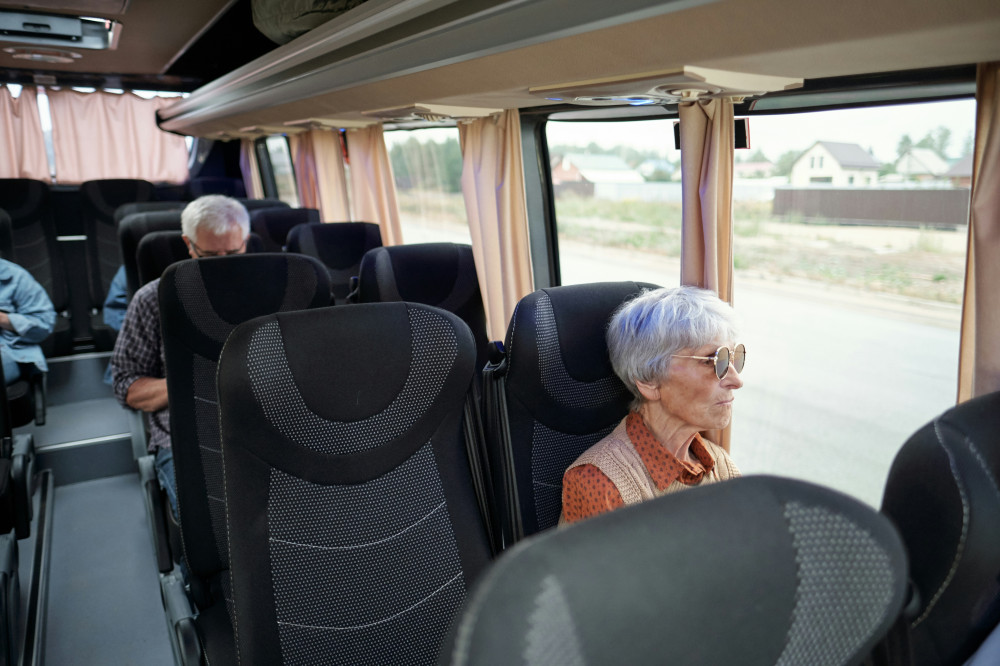
If you prefer a calm and quiet ride, aim for a seat in the middle of the bus, ideally on the side away from the doors. You’ll avoid the constant flow of passengers getting on and off, and the engine noise is usually lower than at the back. Avoid the front rows, where the driver’s conversations and door sounds can be distracting, and choose a window seat so you can lean against the wall and enjoy the view in peace.
A small tip: bring headphones or earplugs if you want to block out background noise – especially useful on longer journeys.
For the social traveller
If you like chatting with fellow passengers or keeping an eye on what’s happening around you, the front rows are a great choice. There’s usually more light, and you can easily talk to the driver or other passengers. An aisle seat gives you the freedom to move around or greet people you know on board.
If you’re travelling with a friend or partner, the double seats in the middle of the bus are ideal – you can sit together without too much hustle and bustle around you.
For those prone to travel sickness
Motion sickness often happens when your eyes and body sense movement differently. The best way to reduce it is to sit where the ride feels most stable. Choose a front seat, preferably by the window, so you can see the road ahead and the horizon. This helps your brain align with the movement and reduces discomfort. Avoid the back seats – that’s where bumps and turns are felt most strongly.
Extra tip: look out of the window rather than at your phone or a book, and open a vent for fresh air if possible.
For the practical commuter
If you take the bus every day, efficiency is key. You want to get on and off quickly and maybe have space for your bag or laptop. Pick a seat near the middle doors, so you can exit easily when your stop comes up. It saves time and avoids squeezing past other passengers. If you work on the go, a window seat can be handy – you can rest your laptop against the wall for a bit of stability while typing.
Many newer buses in the UK now have USB ports or power sockets, so it’s worth choosing a seat where you can charge your phone or tablet during the ride.
Læs også:



For the adventurous traveller
If you’re heading off on a longer trip – perhaps a coach to another city or even abroad – your seat choice can make a big difference to comfort. The front seats offer the best view and a smoother ride, while middle seats often have the most comfortable temperature. If you want extra legroom, go for the emergency exit row – there’s usually more space to stretch out.
For overnight journeys, a window seat is best so you can lean to the side and rest. Bring a small pillow and a blanket – they can make even a long coach trip surprisingly cosy.
For those who want a quick exit
Sometimes it’s all about getting off first when the bus stops. Maybe you’re in a hurry, or you just want to avoid the crowd. In that case, seats near the doors – especially at the front or middle – are your best bet. You can stand up and step off before the queue forms. The trade-off is a bit more noise and foot traffic, but it’s worth it if speed matters most to you.
For those travelling with children
If you’re travelling with kids, it’s best to choose seats near the middle. You’ll be close enough to the doors for easy access, but far enough from the front and back to keep things calm. A window seat can keep children entertained with the view, while an aisle seat makes it easier to get up for snacks or toilet breaks. Bring along some entertainment – books, games, or music – to make the journey smoother for everyone.
The perfect seat depends on you
There’s no single “best” seat on the bus. It all depends on what matters most to you – peace, a view, quick access, or comfort. By thinking about your travel style, you can make even an ordinary bus ride more enjoyable – and maybe even start looking forward to the journey itself.
Læs også: